The most organized roommate should not become the household manager
At first, everyone plans to help. Then one person notices that the paper towels are gone, remembers who used the last of the milk and keeps the shared shopping list in their notes. Everyone else asks what to buy or brings home a second pack because they cannot see what is already there.
That roommate should not become the apartment’s permanent memory. With a shared inventory, the person who finishes something updates the quantity. Whoever goes to the store sees the same information. Responsibility can move because the information moves with it.
Shared supplies get a clear place
Roommates do not have to share all their food. Cleaning products, condiments, trash bags and a few kitchen basics often belong to everyone. A common inventory tracks that useful middle ground without mixing in every personal purchase.
Separate places and lists let each household choose its own rules. The shared kitchen can be visible to everyone while another inventory stays private or is limited to selected members. Different routines do not need to be forced into one long list.
Grocery planning stops living in several chats
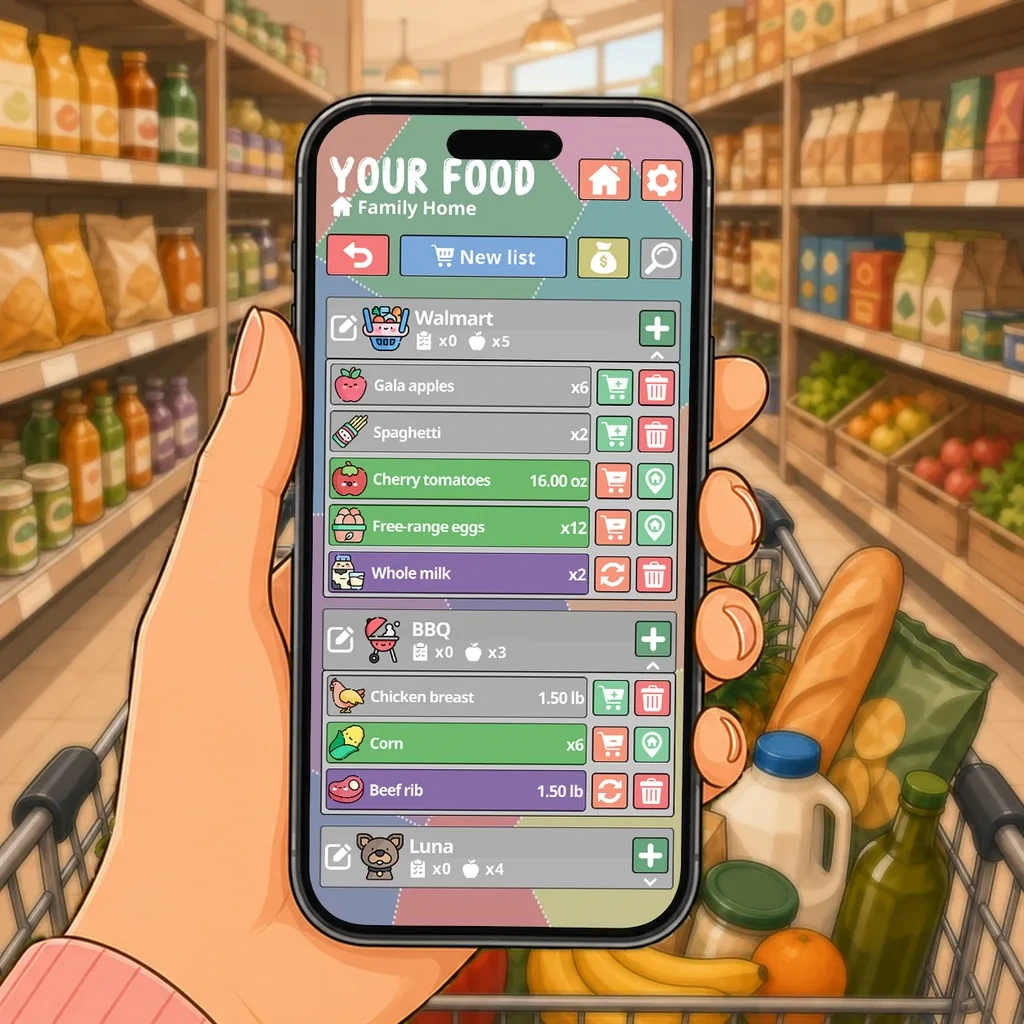
A message gets read and forgotten. A screenshot becomes outdated as soon as someone buys an item. A shared shopping list stays current for the whole apartment. Every roommate can add what is missing, and the person with time to shop sees the latest version.
That continuity reduces duplicate purchases and makes shared expenses easier to understand. More importantly, it spreads the small actions that usually fall back onto the same person.
Everyone can help without learning a new system
Invited roommates open a list that is already filled in. They do not need to rebuild categories or understand every setting before contributing. Adding a product, changing a quantity and checking off a purchase stay quick.
Updates appear in real time when a connection is available. Work completed offline is saved and sent later. The list therefore remains useful in a store with poor reception or an apartment where the Wi-Fi has another bad day.
One purchase covers the apartment
Your Food does not charge for every roommate as a separate seat. One person buys Premium for the inventories they create and can invite up to ten members. The invited roommates do not have to pay to use those shared inventories.
The household can decide who handles a subscription or lifetime purchase. The cost does not increase whenever a new roommate joins, and invited members do not receive a limited version of the shared inventory.