The problem is not organization, it is distribution
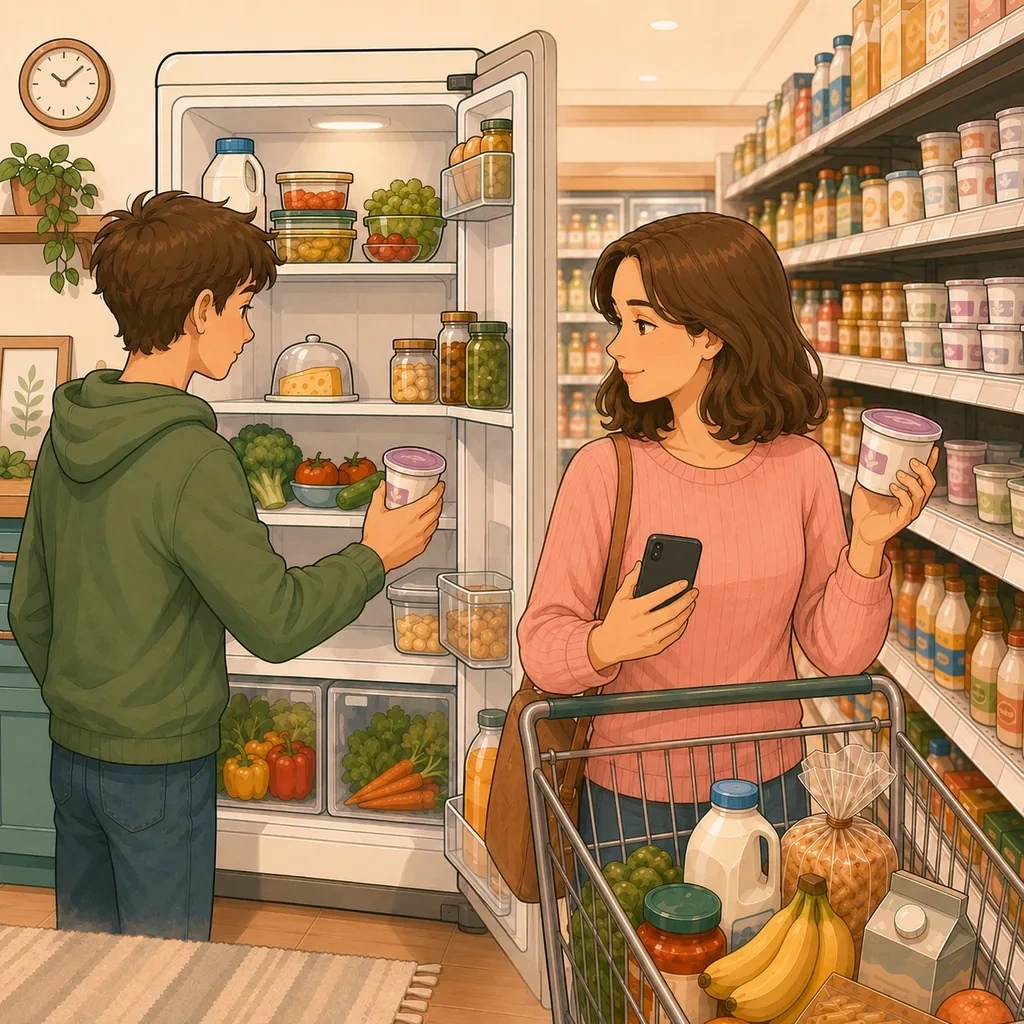
Every shared kitchen has someone who knows what is in it. They know there are two tins of chickpeas, they know the milk runs out Thursday, and they know somebody already bought pasta.
That person is doing real work, and it is invisible work. It also fails in a completely predictable way: the information is in one head, and the decisions that need it get made by other people, somewhere else, usually in a store.
So a second bottle of milk gets bought. So a packet gets opened when there was already an open one. So the person who knows ends up doing all the shopping, because delegating it means answering fifteen text messages.
None of that is a tidiness problem. It is a distribution problem.
What changes when everyone can see it
The knowledge stops belonging to a person. Whoever unpacks the shopping adds it, whoever cooks marks things used, and both of those changes appear on everyone else’s phone immediately.
The practical effects are small and add up quickly:
- anyone can do the shopping, because anyone can see what is needed;
- “do we have any” gets answered by looking, not by texting;
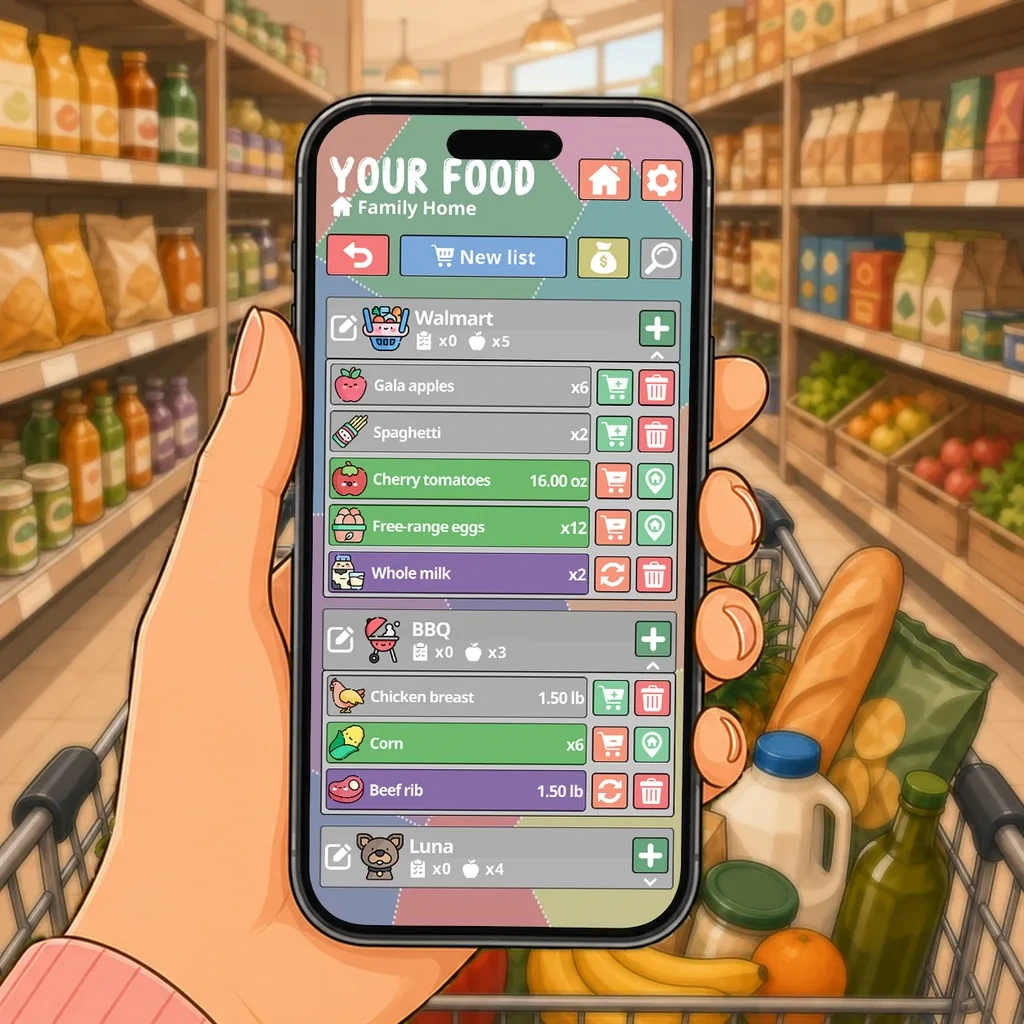
- the shopping list is shared too, so three people adding to it produce one list rather than three;
- nobody has to be the household’s memory.
Roommates need slightly different rules than families
A family shares food by default. A shared flat usually does not, and an app that assumes otherwise will be abandoned within a week.
The pattern that works is a shared inventory for the things everyone genuinely contributes to, oil, salt, cleaning supplies, whatever the house buys together - and individual products marked clearly as belonging to someone. That way the shared list stays useful without anyone having to police it.
Separate inventories per place also help here: your own shelf can be its own inventory that nobody else sees.
One purchase, not one per person
Worth being explicit about, because most shared tools charge per seat.
Only one person needs Premium. That purchase covers every inventory they create and everyone they invite into them. The people invited pay nothing, need nothing, and are not running a limited version of anything.
A household pays once. Not once per person, not once per phone.