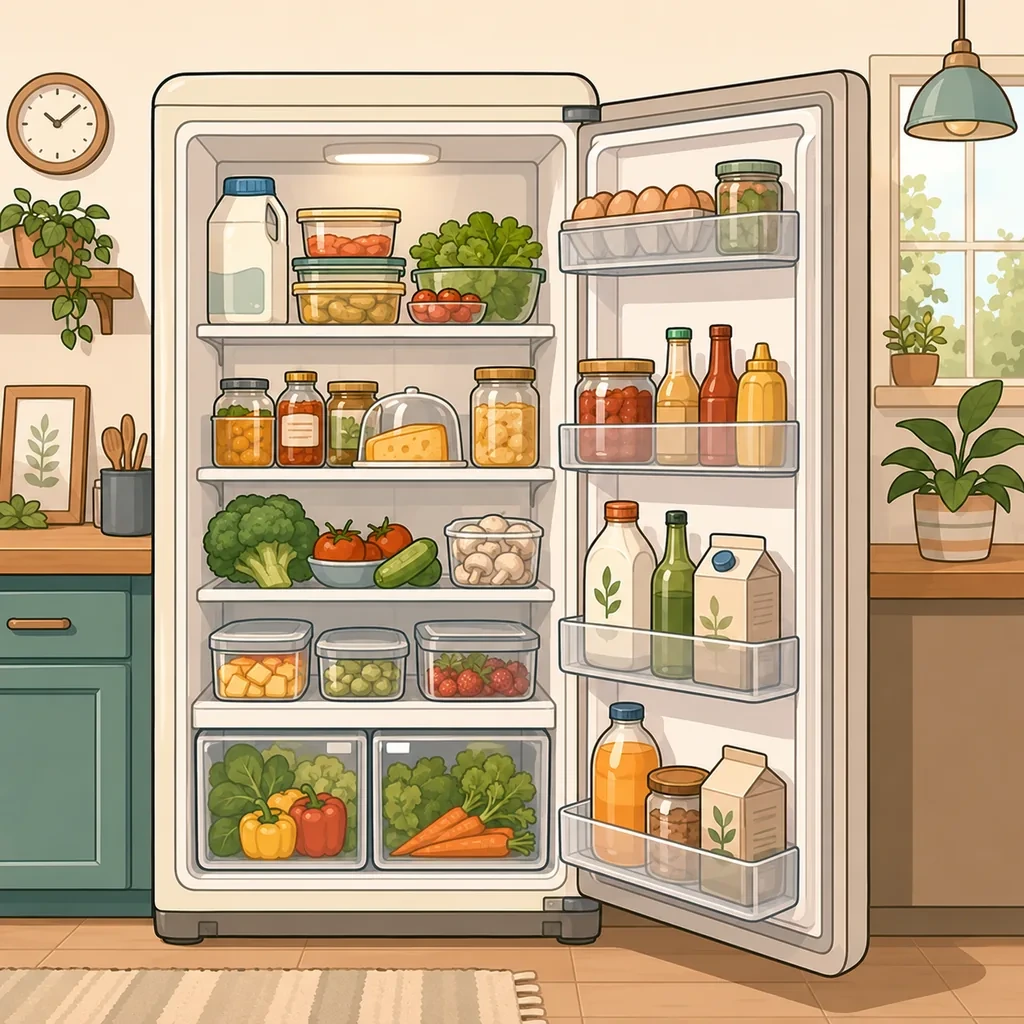
The problem with a pantry is that you cannot see it
A fridge is at eye level and gets opened ten times a day. A pantry is a wall of opaque doors, and the back of a deep shelf is functionally another building. This is why the same three failures happen in every kitchen:
- you buy a third jar of the same spice, because you could not remember;
- something is discovered a month after it turned, at the back;
- you stand in the store trying to picture a shelf you looked at this morning.
None of those are carelessness. They are all the same missing thing: the information exists, but not at the moment you need it.
What a pantry inventory actually changes
You do not become a more organized person. The answer to “do we have any” simply moves from memory to a list, and the list is in your pocket in the store.
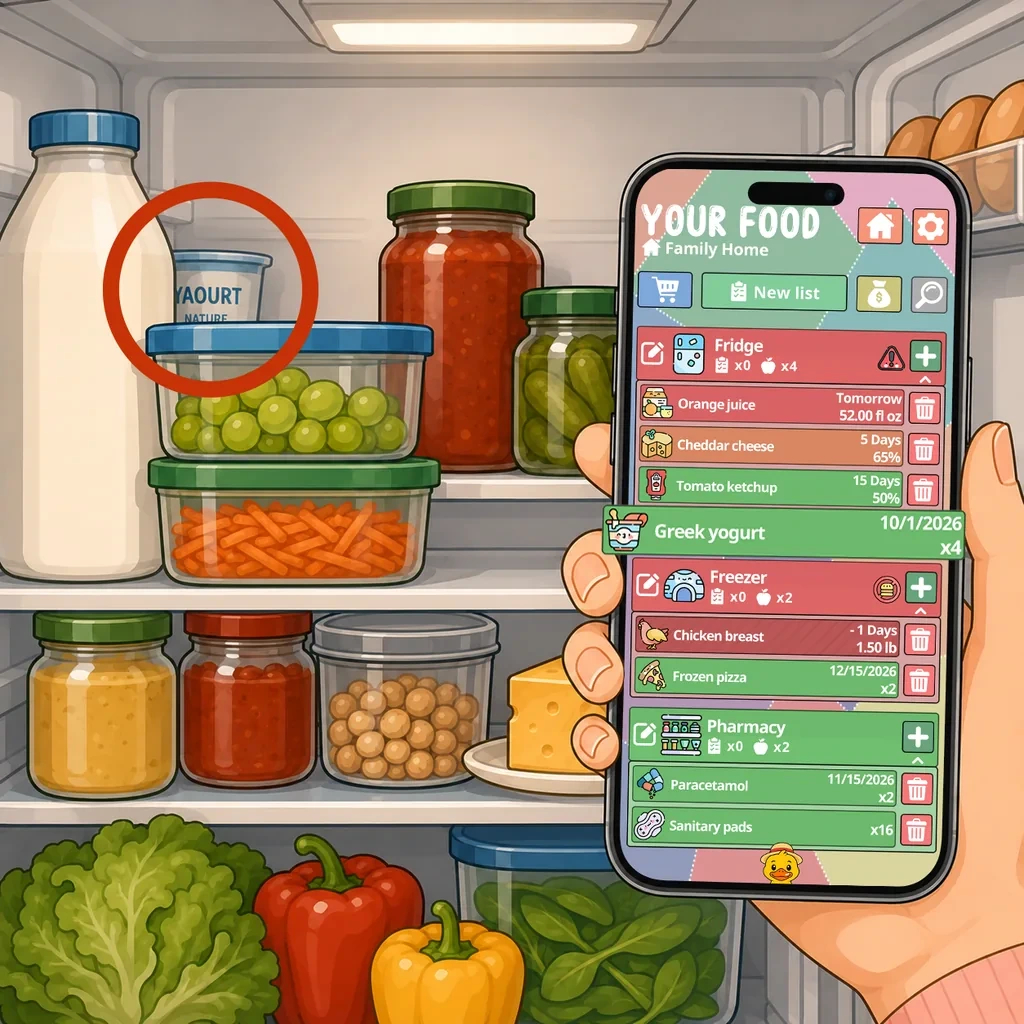
That has a second effect people do not expect. Once you can see the stock, you start cooking from it. Meal decisions stop starting from “what do I want” and start from “what is here that should go first”, which is both cheaper and the single biggest lever on food waste at home.
Setting one up, realistically
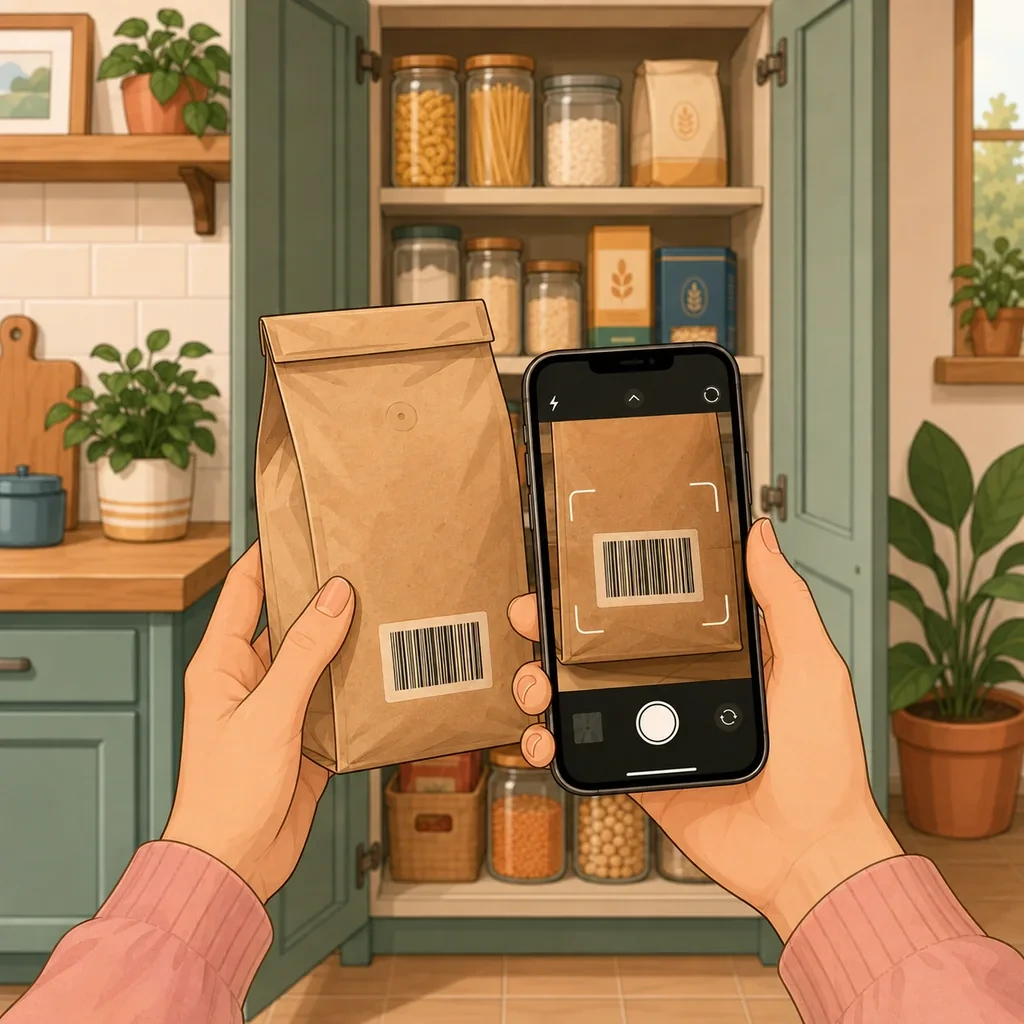
Scan what has a barcode. Point the camera and the product name and category fill themselves in. Ten seconds, not a minute of typing, and that difference is the whole reason an inventory survives past week two.
Type in what does not. Loose goods, market produce, refills, anything decanted into a jar. Name only, if that is all you want.
Add dates selectively. Dairy, meat, fresh produce, anything opened. Skip salt, dried pasta, vinegar and tins where the date is theoretical.
Stop after one shelf. Knowing the contents of one shelf already saves a trip. Everything else can accumulate as you shop.
What it looks like day to day
Adding happens when you unpack the shopping, which is the only moment every product passes through your hands anyway. Checking happens in the store, on your phone. In between, the app surfaces what needs using first, and sends a notification while there is still time to plan a meal around it rather than after the fact.
If you live with other people, the inventory can be shared: one person adds something and everyone else sees it immediately, which is what stops two people buying the same milk on the same evening.