
About
Built in a bedroom, for a problem I actually had.
How Your Food went from a fix for one forgotten fridge to a pantry inventory app with 50,000+ downloads. Built by one person, with no ads, ever.
I kept buying things I already had. A third jar of the same spice, a second bottle of oil, and a yogurt at the back of the fridge that had been there long enough to become a decision I did not want to make.
The apps I found were either a spreadsheet with a nicer font, or so full of features that logging one can took a minute. So I built the one I wanted: something that could hold a whole kitchen without asking for ten fields per product.
It was for me. There was no plan beyond that.
Then I shared it
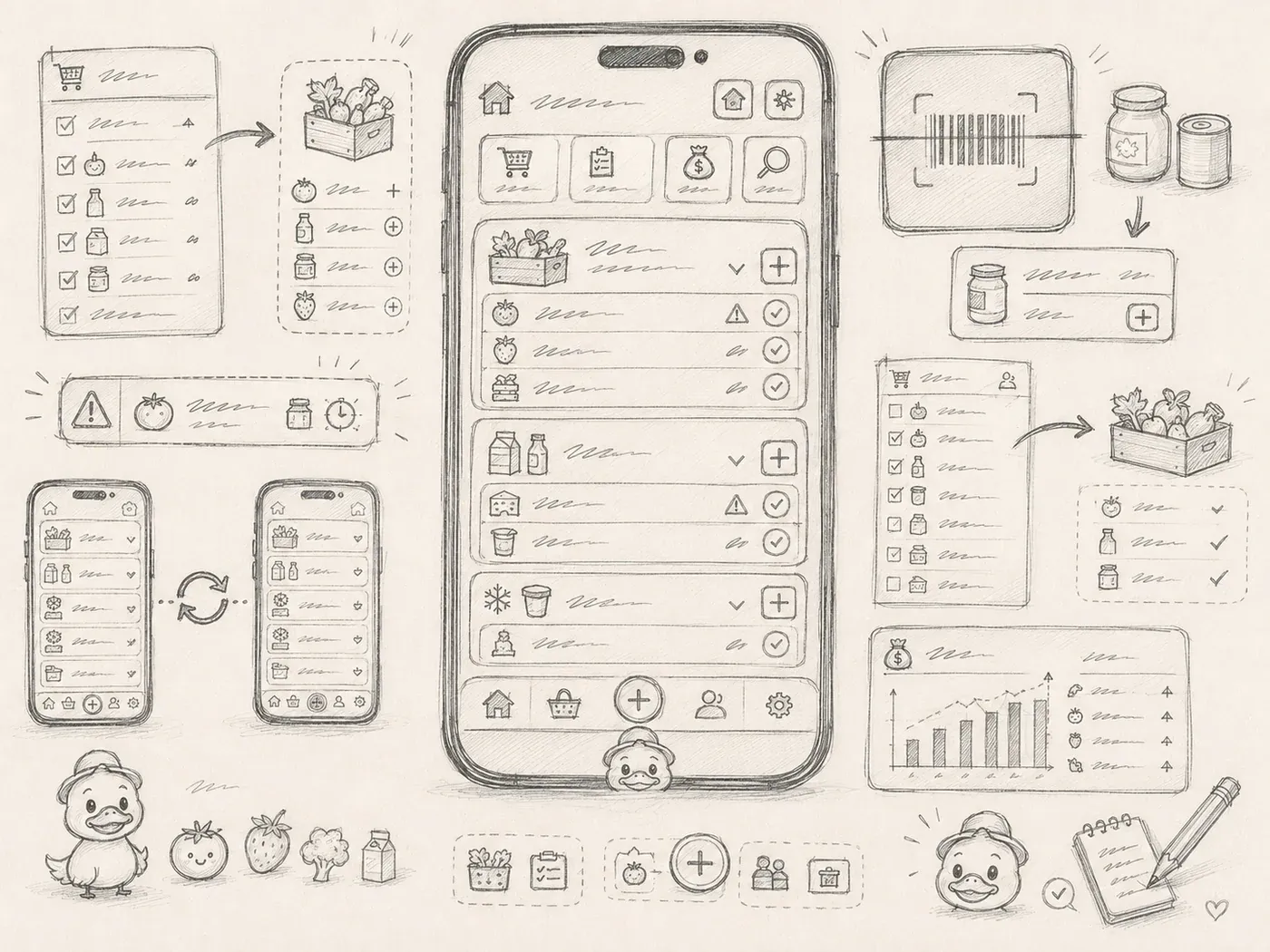
I put it on the stores mostly to see what would happen. People downloaded it, and some wrote to me. They asked for a separate inventory for a second home. For sublists. For sharing, because the person doing the shopping is rarely the person who opened the last packet.
A good number of features are in the app because someone suggested them and the idea was a good one. I read every message and I take the ones that are right for the app, but the call is mine: it has to fit where Your Food is going, and it has to be something I want in the app I use myself. That last part is the filter that keeps it coherent.
Built alongside my studies
I have been building this from my room, in parallel with a degree, for several years. Thousands of hours went in, and plenty of them went into learning what I did not know when I started. It is my first real project and the one I care most about.
You can see the consequences in the product. Development is slower than a funded team’s. But no growth target pushes the decisions, nobody asks for another metric, and there is no reason to add anything that does not help.
Why there are no ads, and never will be
This is the part I will not compromise on. An inventory app is something you open quickly, several times a week, usually standing in a kitchen or a store. An ad in that moment does not just annoy you, it works against what the app is for.
So there is none, in the free version or in Premium. Premium exists so the app can keep being developed, and it unlocks the shared and larger setups rather than holding the basics hostage. Syncing your own account across your own devices stays free, because losing your data when you change phone is not something anyone should pay to avoid.
Where it is today, and where it is going
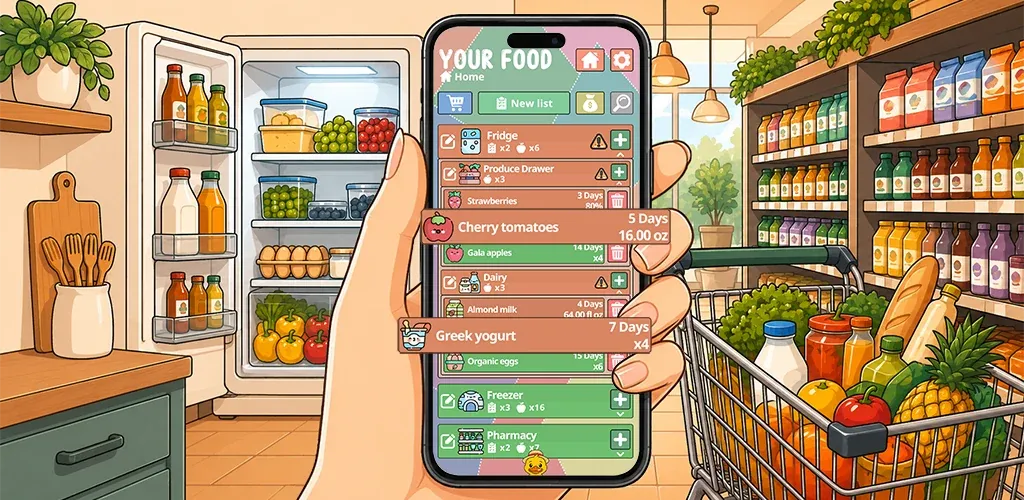
Version 4 is out, and Your Food has passed 50,000 downloads across Google Play and the App Store, with an average of 4.7 out of 5. For something that started as a personal fix for a fridge I kept forgetting the contents of, that is a longer road than I expected.
Where it is going
If you want to see where I am taking the app, the roadmap is the place. It lists what is being built, what comes next, and what is still being weighed up.
None of it is a promise with a date on it. What I can offer is that the decisions are written down in the open rather than kept in my head. If the thing you want is not there, tell me.
Try it
The free version is a real version: inventory, expiration dates, reminders, shopping lists, and syncing across your own devices. No ads, no account to delete later, nothing that expires after two weeks.
Start with one shelf. If it turns out not to be for you, you have lost five minutes.
Your Food is made under Harderue Studio, which is the name I put on my work.